Hubble Constant - Costant Elevation Album

Performer:
Hubble Constant
Title:
Costant Elevation
Country:
US
Genre:
Rap & Hip hop
Released: 2000
Label: Not On Label (Hubble Constant Self-Released)
MP3 album szie: 1854 mb
FLAC album size: 1504 mb
Tracklist
| 1 | Just Singing A SongFeaturing – D.J. Mach-1, Gainen Tha Illyrical, James |
| 2 | M.I.A.Featuring – D.J. Mach-1, Cable-roc |
| 3 | Outro |
| 4 | Hubble Intro |
| 5 | Itermission Blendz |
| 6 | Intermission Blendz |
| 7 | Constant Elevation Intro Featuring – D.J. Mach-1 |
| 8 | Tha Awakening |
Notes
A Portland Underground HuddleShort intro
Hubble's law, also known as the HubbleLemaître law, is the observation in physical cosmology that galaxies are moving away from the Earth at velocities proportional to their distance. In other words, the further they are the faster they are moving away from Earth. The velocity of the galaxies has been determined by their redshift, a shift of the light they emit to the red end of the spectrum. Hubble Constant. Costant Elevation CD, EP. Not On Label Hubble Constant Self-Released. Listen to music from The Hubble Constant like Bringing Down The Telescope, The Quantum Physics of Dave Benson Phillips & more. Find the latest tracks, albums, and images from The Hubble Hubble Constant Ep. Quantum Physics of Dave Benson. The Hubble Constant. Gravediggaz - Constant Elevation from the album 6 Feet hubble constant. Arguably the most important Cosmological discovery ever made is that our Universe is expanding. Its stands, along with the Copernican Principle -- that there is no preferred place in the Universe, and Olbers' paradox -- that the sky is dark at night, as one of the cornerstones of modern cosmology. The uncertainties in the local determination of the Hubble Constant are still dominated by the uncertainty in the Cepheid P-L calibration, followed by uncertanties in the local flow field non-Hubble expansion galaxy velocities. The current state of published measurements is seen below. The Hubble Constant H0 characterizes the present-day expansion rate of the universe. Its value may be determined using a variety of methods. The figure includes results from distance ladder determinations labeled HST Key Project, CepheidsSNIa, Distance Ladder, TRGB Dist Ladder, indirect CMB measurements WMAP9, Planck PR3, both of which combine CMB with other data, BAO in combination with baryon abundance BAODH, the thermal SZ effect CHANDRAtSZ, XMMPlanck tsZ, strong gravitational. The Hubble constant was first calculated in the 1920s, by American astronomer Edwin Hubble. He discovered that fuzzy, cloud-like celestial objects were distant galaxies sitting outside our own Milky Way galaxy, according to NASA. Using his data, Hubble attempted to estimate the constant that bears his name, coming up with a value of around 342,000 mph per million light years, or 501 kilometers per second per megaparsec Mpc in cosmologists' units. A megaparsec is equal to million light-years. More accurate modern techniques have refined this initial measurement and shown that it was around 10 times too high. The Hubble Constant is the unit of measurement used to describe the expansion of the universe. The universe, in fact, is getting faster in its acceleration as it gets bigger. The Hubble constant is the cosmological parameter that sets the absolute scale, size and age of the universe it is one of the most direct ways we have of quantifying how the universe evolves, said Freedman. The discrepancy that we saw before has not gone away, but this new evidence suggests that the jury is still out on whether there is an immediate and compelling reason to believe that there is something fundamentally flawed in our current model of the universeRelated to Hubble Constant - Costant Elevation

GTO - Elevation

Run From Run DMC Feat. Justine Simmons - Praise My DJ's (My Funny Valentine)

Don Armando / Mach - Deputy Of Love / (The Original) On And On

Pater Paul - Gott Ist Nicht Tot / Mach Doch Nur Die Augen Auf!

Angelo's Angels - Mach 9 / Shimmy Jimmy

The Fabulous Mach Kung-Fu - Teenage Letter

Orgasmus & Mach One - Rap Aus Berlin

Next Level - 99 + 1
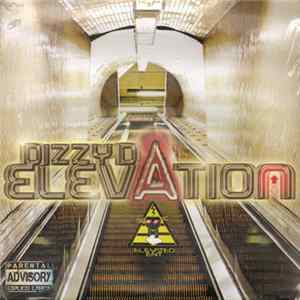
Dizzy D - Elevation
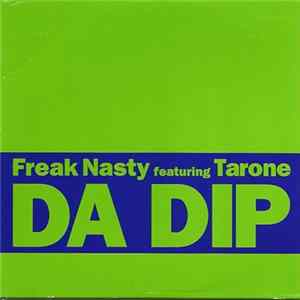
Freak Nasty Featuring Tarone - Da Dip