Main Privacy Policy DMCA Contacts
» » Frédéric Nogray - Buiti Binafin (Déambulation À La Lisière Du Monde)

Frédéric Nogray - Buiti Binafin (Déambulation À La Lisière Du Monde) Album
Frédéric Nogray - Buiti Binafin (Déambulation À La Lisière Du Monde) Album
Performer: Frédéric Nogray
Title: Buiti Binafin (Déambulation À La Lisière Du Monde)
Country: Hungary
Style:Field Recording
Released: 24 Sep 2012
Catalog number: 3L016
Label: 3LEAVES
MP3 album szie: 1544 mb
FLAC album size: 2257 mb

Tracklist

1Buiti Binafin55:19

Notes

Limited to 100 hand numbered copies only.

…Punta Izopo is a mangrove forest located on the north coast of Honduras, in the heart of the Garifuna territory. It’s the early afternoon. We are circulating by boat and I am recording wild life sounds, though this is not the best time of day to do so, because of the heat. With the boat, we enter a little deeper inside the mangrove. There, I am able to find an open space where the tree interlacing roots create a platform wide enough to place a couple of microphones and the recorder. Then we keep rowing through the maze of canals and aerial roots. One hour later, when we come back to collect the recording equipment, I notice some crab remains near the microphones.
I listen to this recording for the first time once I am back to Paris: I close my eyes and I am immersed in the familiar soundscape of the mangrove... until I hear tiny sounds. I am guessing that a crab discovered and tested with its claws the metal stand of the mikes. Then I clearly identify the sound of the crab shell caving into the jaws of a predator. Since I have witnessed an iguana catching a crab and breaking its shell with a single jaw shot, I can easily recognize this sound...

…Nearby, Lancetilla is a botanical garden in the middle of the rainforest near the small town of Tela. It is a haven for many residing birds and a stopping place for migratory birds. The stridulations of insects and the harmonic complexity of birds’ calls form a most enjoyable pattern. I place my microphones and step behind with my headphones on. Not even one minute later, a toucan settles on a branch right in front of the microphones and begins its call while looking at me. It hops twice from one branch to another in order to get closer to the mikes. I would have thought that this type of bird would be fierce in the wild and here I find myself in front of a beautiful toucan performing a solo for me, eclipsing all birds around...

These two events are the starting points of this dreamlike composition. All sounds were field recorded on the north coast of Honduras near the Caribbean Sea during the rainy season in May 2012, then edited, assembled and mixed by Frédéric Nogray in June-July 2012.

Starring keel-billed toucan (Ramphastos sulfuratus), spiny-tailed iguana (Ctenosaura similis), blue land crab (Cardisoma guanhumi) –R.I.P.-, Golden-Mantled Howling Monkeys (Alouatta palliata palliata), Montezuma Oropendolas (Psarocolius montezuma), and many other birds, frogs and insects.

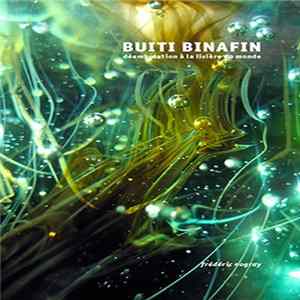
Artwork by Àkos Garai. Original picture from the “Andara Painting” série by Frédéric Nogray.

Thank you very much Àkos Garai, Marcella Perdomo, Mito and Virginia, Arturo Flores and all the Hondurian Team, and Nayla Naoufal (for translation) !

Short intro

Посмотреть сведения об участниках альбома, рецензии, композиции и приобрести альбом 2012 CDr от Buiti Binafin Déambulation À La Lisière Du Monde на free to Frédéric Nogray Buiti Binafin Déambulation Ŕ La Lisičre Du Monde. Frédéric Nogray is a self-taught musician, improviser and composer since 1999. He pays a particular attention on sounds in their intrinsic qualities and for what they are: vibratory phenomenon. But also for their broadcasting into the listening space, our perceptions on it, and the various states of consciousness induced by the listening that led us in the intimacy of the sound, into our own intimacy. Disc IDs 1. Cover Art 0. Buiti Binafin. Additional details. Type: Album. Status: Official. Language: French. Script: Latin. Watch now Frédéric Nogray's video clip of album Buiti Binafin Déambulation À La Lisière Du Monde. See also releases of Frédéric Nogray: Click to release cover to see details: Nelki. The page does not contains any audio, text, video media material, protected by copyright law and does not contains any illegal MP3 content. Frédéric Nogray. In-silent vibes from outer spaces. Today is the release day of the first double album by FANTMS trio with Lee Patterson, Pali Meursault and Frédéric Nogray. You can listen andor order a copy of it on my Bandcamp or on MMLI label' one. It is also possible to order a copy direct from me by message, e-mail, telephone call, letter. Buiti Binafin - Déambulation à la lisière du monde. A Way Out By Knowing Smile The Imaginary Soundscapes Stéphane Rives & Frédéric Nogray. Frédéric Nogray Léran, France. Beside being a creator of electronic, field recording and electro-acoustic musics, Frédéric Nogray adopted an instrumental approach to his practice with crystal singing bowls. Скачать Frédéric Nogray - Buiti Binafin Déambulation À La Lisière Du Monde mp3 release album free and without registration. On this page you can listen to mp3 music free or download album or mp3 track to your PC, album was released in 2012-09-24 year. All track songs from this album Frédéric Nogray - Buiti Binafin Déambulation À La Lisière Du Monde You can not listen to this is not available here, download mp3 music, individually or the whole album. In this site you can not listen to mp3 free and without registration Frédéric Nogray - Buiti Binafin Déambulation À La Lisière Du Monde album. This is only information resource, and you can not download the album in one file to your computer or tablet or phone. Attention . Pop Chanson. Frédéric François. Songs in album Frédéric François - Les Femmes Sont La Lumiere Du Monde 2016. Frédéric François - Les Femmes Sont La Lumière Du Monde. Frédéric François - A Tous Ceux Qu'on Aime. A large archive of magazines from France true PDF, download and read magazines online
Tell Friends!
Related to Frédéric Nogray - Buiti Binafin (Déambulation À La Lisière Du Monde)
Reviews: (9)
Doukree
Doukree
... ... ... ... ... ... .. ... ... ...
Eta
Eta
Frédéric Nogray is a French self-taught musician, composer and sound artist who has being producing work since the late 1990’s. BUITI BINAFIN (déambulation à la lisière du monde) is fifty five minute sound diary of his trip to the north coast of Honduras in May 2012.

The release is in the form of a CDR that comes in a wonderful full colour cover that takes in a close up & almost naturally psychedelic picture of tangles of weeds with-in water. And the use of water in the cover picture is rather apt, as much of the long form & slightly manipulated field recording composition on offer here utilises water as a key element, be it jungle down pours, water splashing, river drippings, distant sound of rushing or pouring water, or the sound of crashing waves.

The whole piece takes in recordings just from Punta Izopo, a mangrove forest on the north coast of Honduras near the Caribbean Sea. The track starts out in the open with around four minutes of jungle bound rainstorm- mixing together a deluge of rain textures with the distant sound of thunder. At just past the four minute mark we seem to go inside, as the storm sounds are distant & not so close now.

As we near just over the nine minute mark the storm seems to slowly fade to the background & in the end disappear, and then we get a selection of soothing yet vibrate & colourful bird songs, monkey & frog sounds…taking in more tuneful & repetitive calls, with more chattering & random calls. Around the thirteen minute mark you can make either distant rain or the rushing of water, but still at the forefront of the recording is the truly beautiful & sonic map of different bird calls/ animal sounds….it’s both lulling & soothing yet also deeply captivating too. As we near the twenty minute mark we get a mixture of distant bird chatter & call, and sudden sound of water drops/ splashing. As the track goes on Nogray mangers to capture wonderfully the lulling yet complex patterns of bird song mixed with distant or sudden close-up water sounds….no real large sonic events or shifts take place along the next ten or so minutes-it’s just all very subtle shifting of bird song/ small animal recordings & their surrounding environments, which gives one the impression of slowly but silently drifting or floating through the peaceful & tranquil mangrove forest.

Around the thirty minute mark we start to get a few breaks in the lulling drift: the sudden hammering of a wood pecker, a hand in water, the amassed searing buzzing of insects, and the constant honking chatter of monkeys or birds- as each element appears then disappears there’s a feeling of building tension with-in the track. At around the forty seven minute mark we get the first clear sounds of mankind with the sound of a outboard motor & crashing wave sounds, from here on you get the odd dart of animal sound, but mostly you seem to drift further & further away from the lulling yet subtle complex sonic feel of the forest.

BUITI BINAFIN (déambulation à la lisière du monde) is a wonderfully recorded and subtle minpliated long form piece of field recording composition that captures perfectly both the beautiful soothing yet detail sonic wonder of this most amazing environment, and the building tension with-in it from mankind & his impingement on it.

Roger Batty - Musique Machine
Voodoogore
Voodoogore
With Buiti Binafin, I discovered a whole new dimension of the natural sounds that are part of my daily life in the village of Triunfo de la Cruz, home to the Garifuna people. It was a unique exploration of sounds and fine details that my bare ears cannot always capture empirically.

Frederic Nogray's album zooms the melody of an intimate world that we both entered as silently as possible in search of these natural treasures. I must say, Buiti Binafin is a special opportunity to let the conquered sounds display their own form of art and uniqueness. Beauty and awareness go together as we visit a living universe captured in this original ensemble.

I'm grateful to Frederic Nogray's wonderful idea to have come to the village where I'am conducting an anthropological research on the Garifuna spirituality. His project of eco acoustic recordings expanded my vision upon the place where I have been living, and gave me as well, a better understanding of the relationship between the Garifuna people and the natural world. A world, that is mainly feared for being not only the home of dangerous creatures, but also for being the cradle of threatening spiritual entities.

As an anthropologist, I undertake a great effort to be as close as possible to the indigenous exegesis. I shall say, this experience was a successful way of changing the perspective of my own vision of man and nature, allowing me to grasp clearly the existence of different ways to read the world around us.

Between mangroves and tropical forests, I have never felt so close to the heart of the earth.

Marcella Perdomo
Yanki
Yanki
Frederic Nogray explores the world with the utmost care, he offers us here a sound diary of a trip in Honduras, oneiric yet so close to reality. In this skrinking environment, where someday the mangrove will be shattered by motorways, where the Garifunas people suffer and get rare, although they never endured slavery; indeed, we know it since Claude Levy-Strauss hammered it into us: tropics are sad, and each time we come, we pare down their territory.

It is in a full awareness of this that Frederic Nogray went there, as a heedful watcher of in situ species, he could roam before setting any microphone; therefore this disc is a condensate of this observation, a precious contemplation that graces our ears.

Rare moments are yielded, a fragile equilibrium between luxuriant life and transformation of life, where territory issues get solved by jaws. Frederic Nogray works the soundscape as a gathering of many elements, birds and insects obviously, sometimes even mankind, as to recall us that there is hardly any place in this world free of sound pollution, but rather than ignore or reject it, he chooses to make it a true ingredient of his work, as to better sublime it's beauty, and fragility.

Flavien Gillié
Kieel
Kieel
A ten-minute tropical downpour greets the listener in Frédéric Nogray’s “Buiti Binafin”, a sonic exploration into the Punta Izopo mangroves of northern Honduras. Home to the Garifuna people, descendants of African slaves brought to Honduras in the 1600s, this is an area whose once pristine environment is now threatened by the activities of economic development. It was with this knowledge that Frédéric Nogray visited the region with his recorder, capturing the sounds endemic to Punta Izopo before they are silenced. “Buiti Binafin” is a composition divided into three parts. Following the density of the tropical storm Nogray moves us into a more spacious domain further downstream in “Buiti Binafin’s” second section. As the rain eases a chorus of life emerges. Birds call from our left and right, trees sway gently in a breeze, cicadas pulsate, a woodpecker vigorously pecks into a tree trunk. Considering the amount of wildlife that moves around the microphones it is interesting that each birdcall or cry from a monkey finds its own clear space. At no time does the biophony become blurred or overpowering. “Buiti Binafin’s” final section is preceded by the calls of a Howler Monkey warning of an approaching motorboat. As the boat sweeps past we move from the depths of the mangroves to the coastline. The familiar crashing of waves is placed against the exotic Montezuma Oropendolas, a bird whose exceptionally unique call is achieved by swinging upside down from tree branches. It is a fitting place to end the composition, with Nogray having taken the listener through the twisted trajectory of mangroves to the river mouth. Aside from the motorboat a lack of industrial sounds distinguishes Nogray’s recordings. Listening to the plethora of bird and insect life that characterises the local biophony it is difficult to believe that mangroves around the world are under threat. A sense of urgency overwhelms Buiti Binafin’s listening experience with the awareness that such places are becoming increasingly rare. We are reminded of questions that have so often been posed in the past decades: what have we lost, what will remain, what great silence might one day pervade these areas? In this context “Buiti Binafin” is a powerful work, the value of field recording confronting the listener with sounds from the precipice.

Jay-Dea Lopez
Xlisiahal
Xlisiahal
Buiti Binafin may be a field recording, but it’s also an attempt to drive home a deeper message: that Earth’s natural soundscapes are disappearing by the minute, and the world’s chroniclers may need to step up their pace. At the same time, it’s a message to the whole of humanity: there’s something worth saving here, and while it’s nice to have pleasant recordings of the outdoors, it would be even better to have the outdoors. This is not a new message (Silent Spring, The Lorax), but it has gained added traction in the modern era.

Frédéric Nogray travelled throughout Honduras to procure these recordings. The press release states, “we know it since Claude Lévy-Strauss hammered it into us: tropics are sad, and each time we come, we pare down their territory”. But this is not altogether true. Some visitors tear down trees, and others plant them. Some disrupt natural environments, while others seek to preserve them. A tropic is neither sad nor happy; it just is (or isn’t). And so while listening to Buiti Binafin, one might treasure the sounds of birds in the trees or wonder if they are about to become extinct; one might accept the human intrusions or rail against them. But one will probably never think, “oh, what a shame that the river is drying or the weather systems have been disrupted”, because no matter what we do, there will always be rivers somewhere, and rain. As sonically thrilling as the opening thunderstorm may be, it’s not this soundscape’s most unique facet: the recording of indigenous avian species, twittering throughout the bulk of the hour-long track. In its latter quadrant, the piece shifts to night: insects appear, nightbirds emerge, the former cries recede.

When eight minutes remain, a loud vehicle enters, swiftly folding into the sounds of crashing water. While normally such an appearance would shatter the reverie, it’s the most active sound since the thunderstorm, and as such, it draws the attention in a pleasant way. The locals seem frightened, but the recording grows more interesting. One of the (unidentified) birds even sounds like a synthesizer. Hearing such a sound, one wonders what a flock of such birds might sound like if used in the manner of a cat piano (although we do not condone such behavior). In the end, the listener is left to ponder the sounds, to enjoy them, or both. Nogray’s intentions are laudable, but whether the album makes one want to save habitats or simply visit them will vary according to the audience.

Richard Allen - A Closer Listen
Falya
Falya
Some times I want to listen to the sounds of the rain forest. Sometimes it’s be the best I can do to be fully or acousmatically transported away from the quotidian sounds that just potentialize the often boring and stressful character of my every day existence.

The cars, my house, people talking, the TV, the telephone…

Through the last three months I visited forest areas near my city way more often than usual. It becomes an incredible experience to be by yourself in the middle of all this nature, quietly listening to this multitude of sounds forcing the perception to multiple focus and finding some pleasure and meaning on that.

On the quest to visit the rain forest while in my house in the middle of a concrete jungle I found ’Buiti Binafin’ which immediately managed to transport me there. This is truly one of the potentials of field recording based music, the potential to transport the listener somewhere else whether it’s to the Antartica or to a shoes factory.

By recording the rain forest and the vast bio-diversity found there, the artist is addressing the power of nature in terms of is complexity. By playing back this recordings he plays the role of a distorting medium, a messenger of an ever- fading message. In a way the artist always mimics the nature but he is only successful when he ‘becomes’ the nature, when he finds ways to mimic the nature as a power, as a vector of strength and magnitude.

Why would the artist try to act as he was the nature?

Because only the nature and its forces helps establishing the sense of immeasurable magnitude and incompressible complexity that derive in an emotion we can refer to as the sublime.

The sublime seems to be an emotion that triggers many phonographic based works. This contact with the magnitude and power of the nature leaves a track, a void that the sound artist fills with his memory imprinted on the tape or the memory card.

In despite of its phonographic character the listener could ponder the artist’s craft in ‘Buiti Binafin’ at least through the fact that there is a rational and emotional structure throughout the work: the pice starts with loud sound of waves that later return through the end. All across the lengthy middle the listener enters a long fragment where he could hear mostly sounds made by animals. The artist’s craft can also be sensed on what seems like juxtaposition of sounds on some fragments of the release.

The formal results in ‘Buiti Binafin’ are quite compelling, the sounds are fully believable and the whole emotional atmosphere he manages to build has this ‘sublime’ character that sets up a scenario for sensible and intellectual craving.

In regard of the question ‘to edit and juxtapose or not to’ in phonographic based composition some can say who cares, but for some artists it can be a puzzling question.

The line that divides documental phonography and music concrete can be rather blur for the listener. Anyway the intention to document and the intention to manipulate material are very different.

Frédéric Nogray seems to have found a balanced point here: the listener can sense the derive and natural order of things. But when the edition is visible we can tell there is something he wants to say or point out to. Personally I think he is interested in the power of nature depicted in contrast: movement and the stillness, violence and the calm, harmony and the noise.

When one reads the ‘Buiti Binafin’ liner notes one can tell Frédéric Nogray spend long hours in the the jungle probably being very quiet while watching the nature do its thing. His role here exemplifies the role of the artist who feels that being a medium is ethically his only choice.

Then when he returned home, the forest stopped being the subject, now his experience, his memories of the forest became the subject, and in this process he also turns from being a quiet observer to be the action himself. He becomes ‘the creator’, he becomes a force in the universe.

‘Buiti Binafin’ puts on the table the metaphoric character of recording sounds as a way to capture time. Recordings sounds is a useless and yet essential exercise in order to poetically deal with the ineffable character of the universe and the emotional meaning we get when we have an experience with it.

John McEnroe - The Field Reporter / Sonic Field
Goldenfang
Goldenfang
"Some field recordings releases gradually draw the listener into their worlds; Nogray's, by comparison, drenches the listener from the first moment with the relentless downpour of a thunderstorm, prompting one to visualize the tropical setting covered in rain and the colours of its mangroves illuminated even more strongly as a result (it's worth noting that the field recordings were gathered in May, 2012 during the area's rainy season). His sound diary captures the natural setting—Punta Izopo, a mangrove forest on the north coast of Honduras near the Caribbean Sea—in all its glorious detail: following the storm's cessation, birds twitter, insects stridulate, a toucan caws, and flies buzz, with all of it arising alongside a persistent ambient hum of water-related sounds. Though rustlings and splashes do appear, evidence of a human presence is modest for much of the recording, until, that is, what appears to be a vehicle of some kind barrels into view at the forty-seven-minute mark before just as quickly morphing into the violent rainfall and thunderstorms with which the recording closes. That transformation is the one moment where Nogray's manipulation of the source material is most clearly evident, even if it's likely that his hand has shaped the other sounds as much if less noticeably. An ecological-environmental dimension subtly shadows the project, and highlights the fragility of the setting and the omnipresent threat of human invasion. Consequently, some small undercurrent of anxiety pervades the listening experience, as one luxuriates in the sounds populating the realm while also mindful that the recording might possibly be heard at some future time as a historical document of a land that no longer exists. Even so, the impression generally established is of a peaceful, even paradisiacal, natural setting not yet spoiled by industrialization—a development that might be seen as transformative or desecrating, depending on the point of view taken."

Ron Schepper
MeGa_NunC
MeGa_NunC
Pour ce projet de field recordings de la maison 3Leaves, Frédéric Nogray a pris place dans la barque de Dante, à moins que ce ne soit sur un bateau, au Honduras. « Déambulation à la lisière du monde », est-il écrit sur le disque. Je ne connais pas le Honduras mais je sais maintenant ce que peuvent remuer en nous les souvenirs des autres.

Ma déambulation à moi importe, à la lisière de l'intime. Une pluie drue et c'est l'orage et le tonnerre derrière, un orage plus violent que celui sous lequel je t'ai un jour couru après. Le son a quelque chose à voir, ce son de rideau de fer qui tombe, derrière lequel tu as disparue. Il a fallu que je m'en retourne, 180 degrés et le soleil est revenu : on aurait dit les oiseaux samplés qui m'annonçaient que j'allais tout oublier.

Difficile, en effet, de s'accrocher à une pluie battante, de croire qu'un bruit peut faire un bon souvenir ou qu'un son peut être une dédicace qu'on vous adresse. Ces grenouilles, amphibiens, insectes agressifs, m'atteignent-ils ? Ils ne parviennent en tout cas pas à me parler de leur existence et d'une autre réalité que la mienne. Par contre, ils trouvent en moi des chemins tortueux où ils font leurs couches. Au fond de notre mémoire, on trouve parfois des souvenirs morts à côté de bruits du bout du monde où l'on n'est jamais allé.

Héctor Cabrero - Le son du grisli